

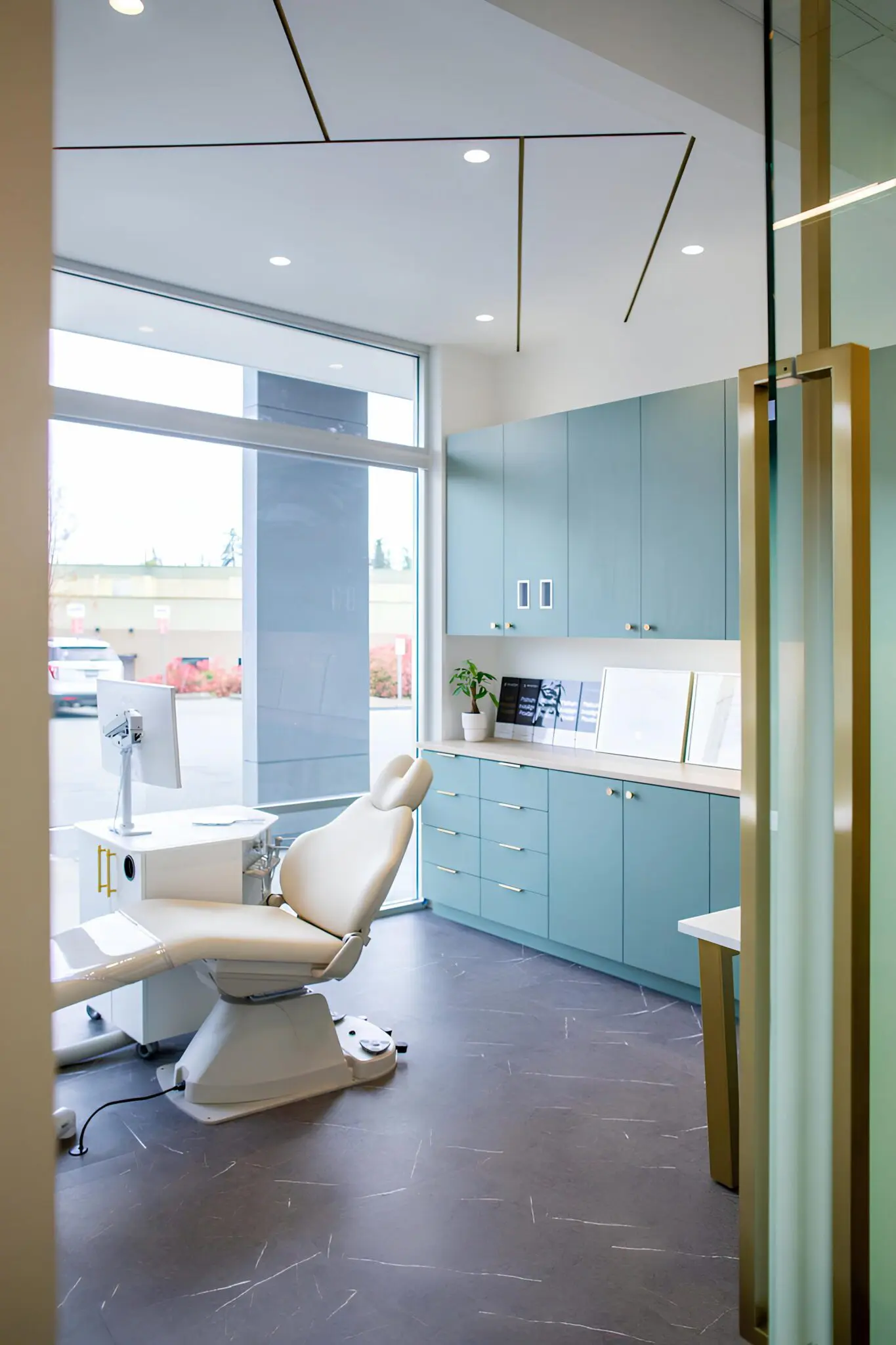

A modern dental office at Emerald City Orthodontics in Kirkland WA, features a reclining exam chair and bright natural light.

Types of Braces in Kirkland WA: A Comprehensive Guide

Pastel pink and green rounded shapes on a pale background, representing Emerald City Orthodontics in Kirkland, WA.
Orthodontic braces are tools designed to fix misaligned teeth and straighten your smile. By applying consistent, gentle force over time, they gradually shift teeth into the ideal position. This guide details the types of braces available, their benefits, and which may suit you best for achieving a confident smile.

Clear Aligners such as Invisalign

This modern orthodontic option uses clear, custom-made trays to straighten teeth over time.

Components

Custom made clear aligners or trays.

Advantages

Nearly invisible, removable for eating and cleaning.

Considerations

Requires discipline to wear consistently, not suitable for severe cases.

Smiling woman with straight brown hair holds Invisalign aligners at Emerald City Orthodontics in Kirkland WA, on white background.
Smiling with metal braces, a young blonde woman in casual wear gives a thumbs-up for Emerald City Orthodontics in Kirkland, WA.

Metal Braces

Traditional metal braces use strong brackets and wires to correct even the most severe alignment issues. Though noticeable, they are dependable and budget-friendly.

Components

Metal brackets, archwire, rubber bands.

Advantages

Effective for severe misalignments, cost effective.

Considerations

Visible, may cause discomfort initially

Ceramic Braces

Ceramic braces are made with brackets designed to blend in with your teeth, offering a more discreet alternative to metal braces.

Components

Ceramic brackets, archwire, optional rubber bands.

Advantages

Aesthetic appeal, nearly invisible.

Considerations

More fragile than metal braces, may stain.

A bearded man in a white lab coat smiles, showing clear braces at Emerald City Orthodontics in Kirkland, WA, indoors.

Considerations for Different Age Groups

Orthodontic treatment can be successful at any age, and many patients today benefit from a range of options, including Invisalign, customized braces and traditional braces. Invisalign is widely used across all age groups because of its comfort and discreet appearance, while braces remain an important choice for specific orthodontic needs.
Children and teens: Invisalign is commonly recommended because it is comfortable, removable, and easy to keep clean. For certain orthodontic goals, metal braces or other appliances may still be used.
Adults: Most adults prefer Invisalign for its discreet appearance and predictable results, though ceramic braces or other brace types remain available when needed.
Braces are a fantastic option for straightening teeth and they’re suitable for both kids and grown-ups alike!
Choosing the ideal type of braces relies on personal requirements, cosmetic preferences, and the severity of dental concerns. Consulting with an orthodontic specialist can help determine the most suitable option for effective treatment and a confident smile.
Three teens outside in autumn show off braces from Emerald City Orthodontics in Kirkland, WA while snapping a cheerful selfie.

Braces FAQ

How do I know which type of braces is right for me?

Choosing the right type of braces depends on your specific dental needs, daily habits, and personal preferences. Traditional metal braces are highly effective for correcting complex dental issues and are often the most cost-effective choice. Ceramic braces provide a more discreet appearance as they match the color of your teeth, although they may come at a slightly higher cost. Clear aligners, such as Invisalign, are nearly invisible and removable, offering unmatched comfort and flexibility, but they might not be ideal for addressing severe orthodontic issues. Consulting with your orthodontist will help you identify the option that best suits your treatment objectives and lifestyle.

How do ceramic braces differ from metal braces?

Ceramic braces offer a more visually discreet choice compared to metal braces, as their tooth-colored brackets blend naturally with your teeth, making them less noticeable. They work in the same way as metal braces, effectively straightening teeth, but are often preferred by people seeking a subtler appearance during treatment. However, ceramic braces tend to be slightly more expensive and require careful maintenance to avoid staining or damage. Both types are highly effective, and the decision ultimately depends on your personal preferences and orthodontic requirements.

Which type of braces is the fastest for results?

The duration of orthodontic treatment depends on the complexity of your case and the type of braces selected. Clear aligners, such as Invisalign, can deliver faster results for mild to moderate cases when worn consistently as instructed. For more complex orthodontic needs, LightForce braces are often the fastest option, as their fully customized design allows for exceptional precision and efficient tooth movement. Your orthodontist will create a personalized treatment plan to ensure the most effective and timely path to your ideal smile.